
704-643-5652
sales@precisethermal.com
Jacketed Piping Design Considerations
Jacketed piping is a process heating approach used to maintain or control the temperature of fluids flowing through industrial piping systems. In a jacketed system, a secondary pipe or enclosure surrounds the process pipe, allowing a heating (or, in some cases, cooling) medium to circulate around the product line. Heat is transferred through the jacket wall into the process fluid, supporting viscosity control, freeze protection, and temperature stability in applications where insulation or external tracing alone may be insufficient.
This page outlines common jacketed piping design considerations based on widely accepted industry practices. Actual system design should always be evaluated against specific process requirements, operating conditions, and project specifications.
Fundamental Design Concepts
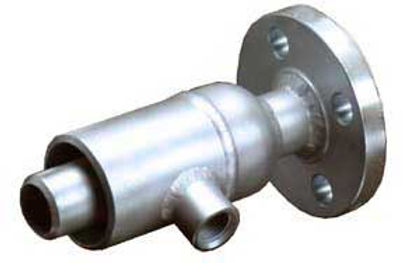
A jacketed piping system consists of a core process pipe enclosed by an outer jacket through which a thermal medium circulates. The intent is to introduce controlled heat uniformly along the pipe length or at selected locations. Because jacketed piping is an active heating method, its performance depends not only on the heat source but also on jacket geometry, flow distribution, and system layout.
Uniform temperature control is often cited as a key advantage of jacketed piping. However, achieving uniformity requires careful attention to circulation paths, drainage, and mechanical design. Poorly configured jacket circuits can result in uneven heating, stagnant regions, or excessive pressure drop, reducing overall effectiveness.
Establishing Design Inputs
Effective jacketed piping design begins with a clear understanding of the process requirements. The required maintain temperature, allowable temperature range, and thermal sensitivity of the process fluid influence the heat load that must be delivered. Fluid behavior—such as changes in viscosity with temperature or the tendency to solidify—often drives the need for jacketed systems in the first place.
Pipe size, length, routing, and ambient conditions further affect heat loss and circulation requirements. Available utilities, such as steam, thermal fluid, or glycol, also constrain design choices and often determine the overall heating approach. Control expectations should be defined early, as systems designed for basic freeze protection differ significantly from those intended for tighter temperature regulation.
Heating Medium Selection
The heating medium circulating within the jacket has a direct impact on system capability, complexity, and operating characteristics.
Steam is commonly used where steam utilities are available and higher heat flux is required. Heat transfer occurs primarily through condensation at the jacket wall, which can be very effective. In practice, steam-jacketed systems require careful condensate management to maintain performance and avoid operational issues. Temperature control is typically linked to steam pressure and may be limited unless additional regulation is provided. Steam is generally well suited for applications with moderate to high heat duty where precise temperature control is not critical.
Hot Oil is a liquid heating medium that circulates at an elevated temperature independent of system pressure. This allows higher practical operating temperatures than steam in many industrial applications without the need for high-pressure equipment. Hot oil systems can provide stable and predictable heat input but require properly designed circulation systems and attention to heat loss, particularly over long pipe runs.
Glycol or water-glycol mixtures are typically used for freeze protection or moderate temperature maintenance. These systems are often selected where uniform heating across larger piping networks is required and where safety or controllability is a priority. Glycol-based systems are generally limited to lower operating temperatures than steam or thermal fluids and are not commonly used for high-temperature duties.
Jacket Configuration and Coverage
Jacketed piping systems may be configured in several ways depending on process needs and physical constraints.
Full-length jackets are applied when continuous heat input is required along the entire pipe run. These systems rely on proper circulation of the heating medium to achieve consistent temperature control. Jacket thickness, internal clearance, and inlet and outlet placement all influence flow behavior and pressure drop within the jacket circuit.
Spot jackets are used where heating is required only at specific locations, such as around valves, pumps, or short process sections. This approach can reduce fabrication complexity and cost but introduces thermal transitions between jacketed and non-jacketed sections. These transitions should be evaluated to avoid localized temperature gradients that may affect process performance.
In certain applications, custom or multi-pass jacket designs are used to improve heat transfer efficiency or temperature uniformity. While these configurations can enhance performance, they also increase fabrication complexity and require careful consideration of mechanical and thermal stresses.
Thermal Performance Considerations
The thermal performance of a jacketed piping system depends on both the properties of the heating medium and the way it flows through the jacket. Steam provides high heat transfer through condensation, while liquid heating media depend more heavily on circulation velocity and jacket geometry to achieve effective heat transfer.
Flow Distribution
Uneven flow distribution within the jacket can lead to low-velocity or stagnant regions that reduce heating effectiveness. Proper inlet and outlet placement, avoidance of dead-end sections, and thoughtful routing of the jacket circuit help mitigate these issues. In some configurations—such as tube-in-tube style systems—countercurrent flow arrangements may be used to improve heat exchange efficiency where geometry allows.
Thermal Expansion
Both the process pipe and the jacket expand as temperatures increase, and differential expansion can introduce mechanical stresses if not properly accommodated. Long pipe runs and elevated operating temperatures often require provisions such as expansion loops, joints, or flexible supports to maintain alignment and integrity over time.
Materials and Fabrication Considerations
Material selection for jacketed piping is driven by operating temperature, corrosion considerations, and compatibility with both the process fluid and heating medium. Carbon steel is commonly used for general service, while stainless steel or alloy materials may be required for corrosive or high-temperature applications.
Fabrication quality plays a significant role in system performance. Maintaining concentricity between the jacket and core pipe supports consistent heat transfer, while proper weld procedures and inspection access contribute to long-term reliability. Fabrication and testing practices are typically performed in accordance with project specifications and applicable codes, and may include verification of both the process pipe and jacket as required.
Jacketed Piping Compared to Other Heating Methods
Jacketed piping is often selected when insulation alone cannot maintain the required process temperature or when higher and more uniform heat input is needed than external tracing can practically provide. Compared with electric heat tracing, jacketed piping typically offers higher heat flux and more uniform heating over continuous surfaces, making it suitable for high-viscosity or temperature-sensitive services. Electric heat tracing, however, may be simpler and more economical for freeze protection or moderate temperature maintenance, particularly on long pipe runs.

Common Design Challenges
Common challenges in jacketed piping systems include inadequate heating medium circulation, insufficient condensate management in steam systems, failure to account for thermal expansion, and limited temperature monitoring. Addressing these considerations during design reduces operational issues and improves long-term system reliability.
Our Jacketed Pipe
When properly engineered, jacketed piping provides reliable and effective temperature control in demanding industrial applications. Precise Thermal supports jacketed piping projects through design input, system selection, fabrication coordination, and field support, tailored to specific process requirements.
For supply capabilities and project assistance, visit our Jacketed Piping Systems page.
Related Process Heating Solutions
In addition to jacketed piping, Precise Thermal supports other process heating methods including electric heat tracing, steam tracing, glycol tracing, and removable insulation systems. In many facilities, jacketed piping is used alongside these methods to provide a comprehensive temperature control solution.
For applications requiring thermal insulation rather than heating, we offer vacuum jacketed piping systems engineered to minimize heat transfer for cold-service and cryogenic applications.